X-Ray Inspection Services for Foreign Material in Food
Foreign material in food or other products creates an immediate need for fast, accurate information. Third-party X-ray inspection is built to deliver it.
FlexXray’s industry-leading X-ray inspection services help manufacturers identify contaminated product in order to determine what product can be safely released. Product is transported to a FlexXray facility and inspected using medical-grade X-ray systems designed for detailed investigation that goes beyond what typical in-line systems can provide.
With facilities across the U.S. and in Europe, product can be routed and inspected quickly—without overloading internal teams or slowing down operations.
98% of product inspected by FlexXray can potentially be returned to commerce.
How X-Ray Inspection Works
FlexXray’s process is designed to move quickly while keeping everything controlled and fully traceable.
RECEIVE
FlexXray’s process is designed to move quickly while keeping everything controlled and fully traceable.
INSPECT
Product is sent through medical-grade X-ray systems configured for the specific product and packaging format. These systems detect and identify potential foreign material, and contaminated items are flagged and separated for further review or removal.
REPORT
At the end of the process, you’ll receive a detailed report outlining what was found, where it was found, and how much product was affected. This documentation supports internal decision-making for product disposition and can help with corrective action and root cause analysis.

What X-Ray Can Detect
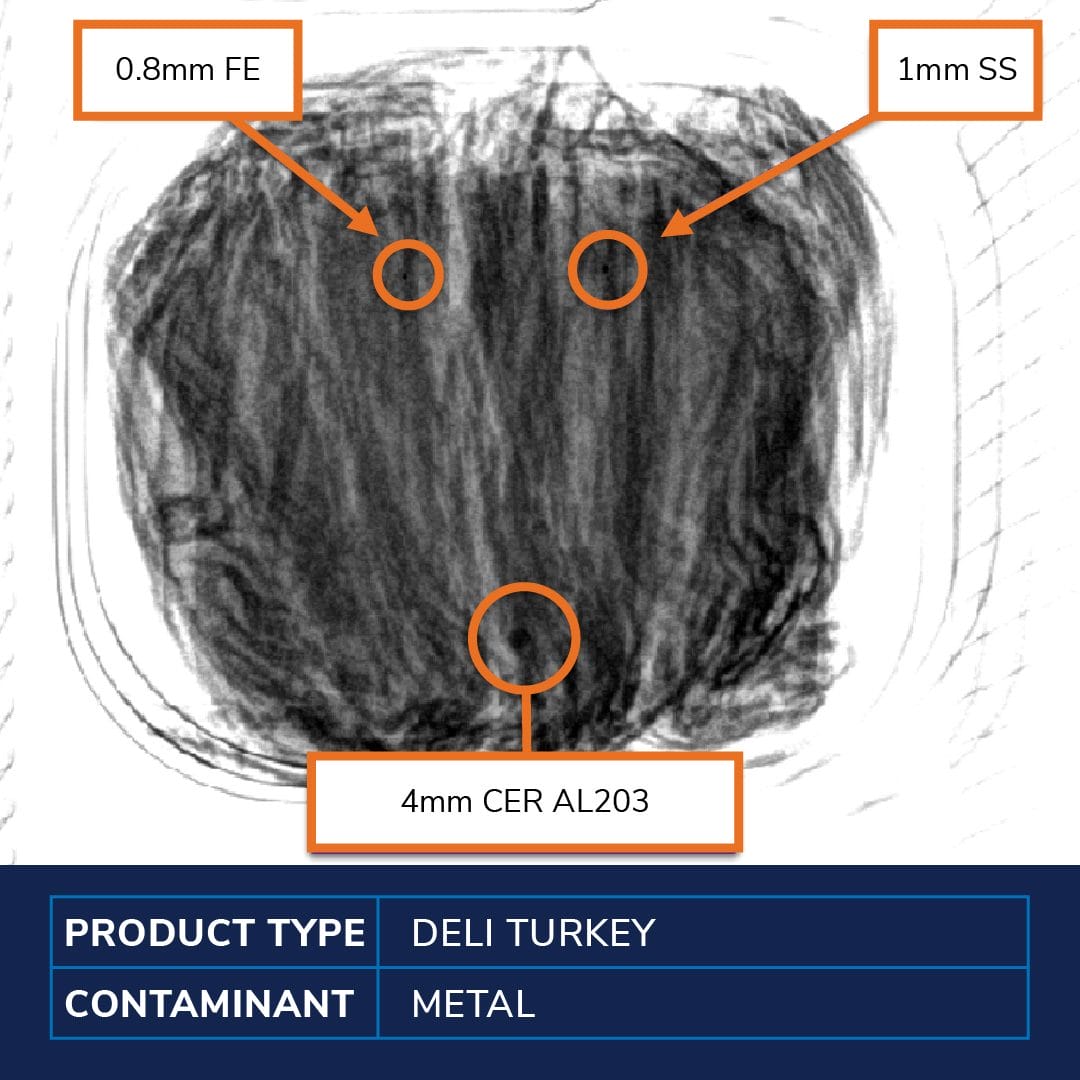
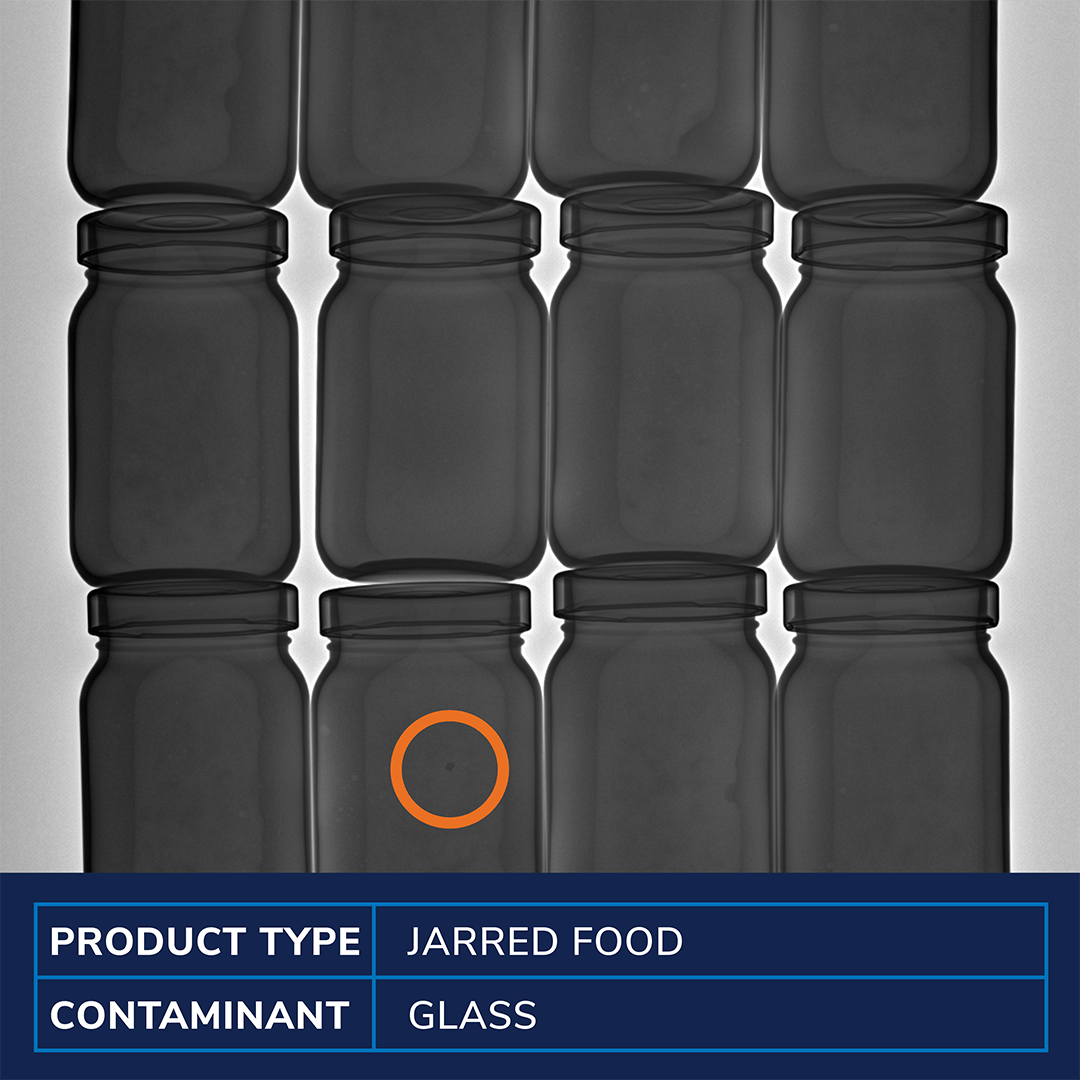
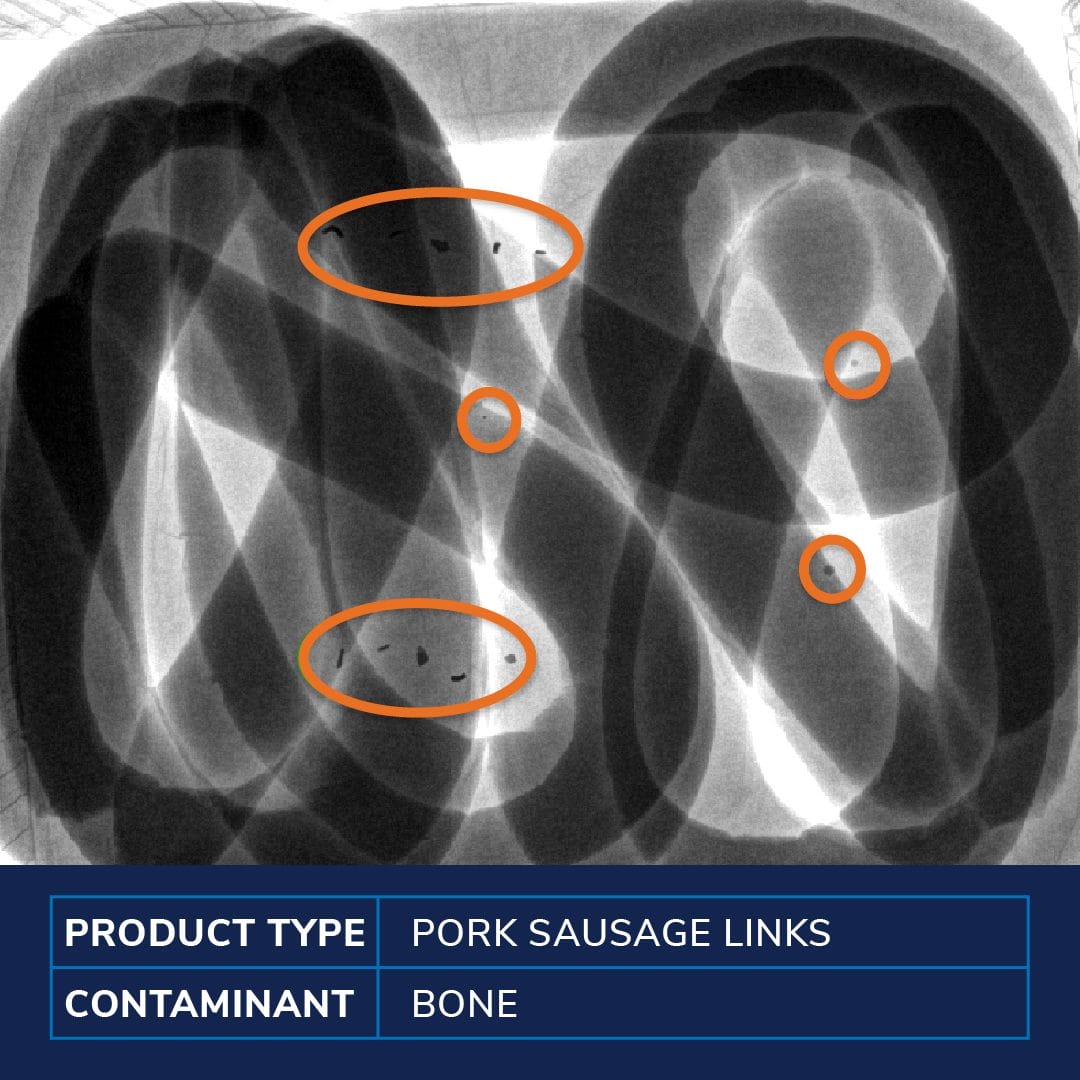
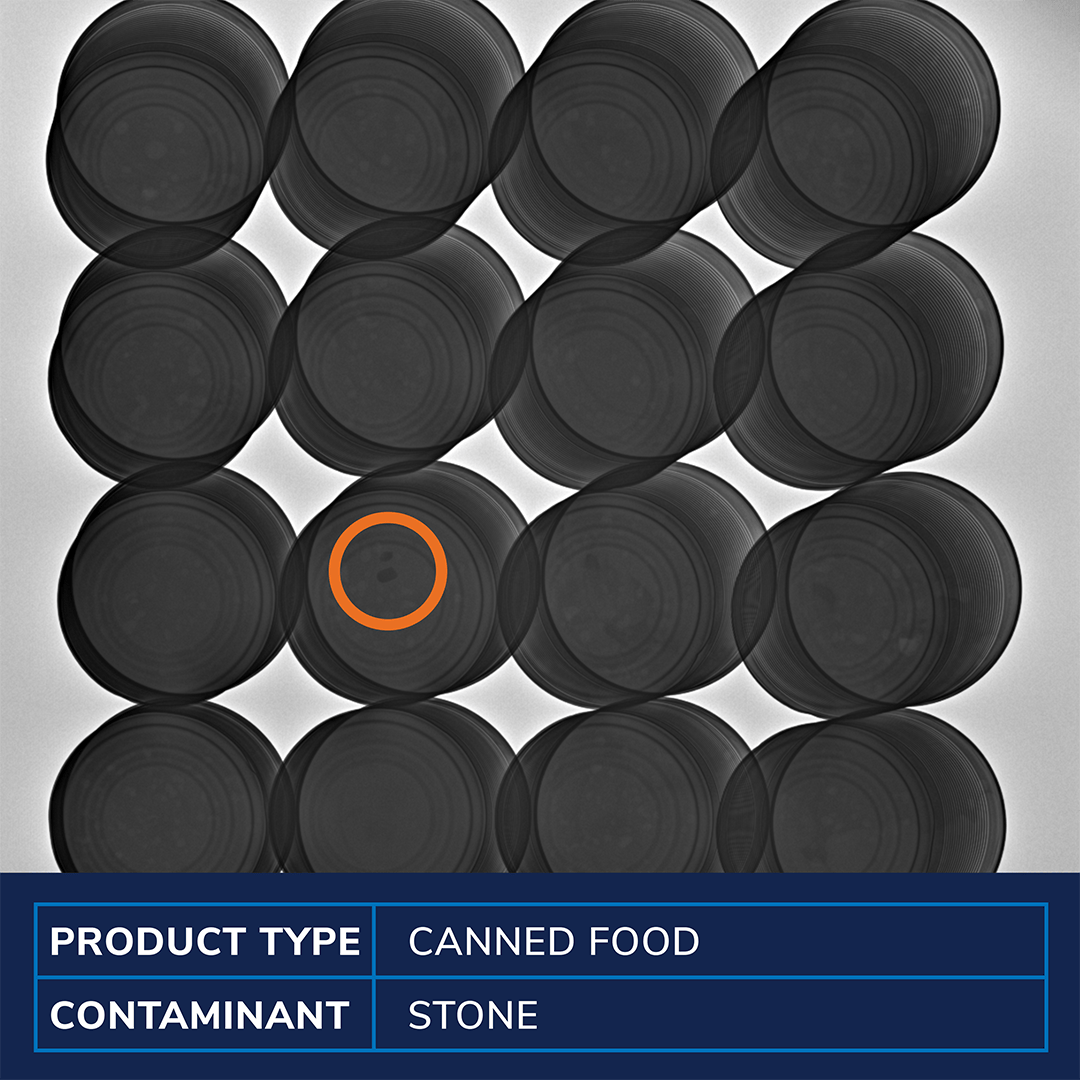
X-ray inspection is effective at identifying a wide range of foreign materials in food and other products, including:
- Metal
- Glass
- Bone
- Stone and mineral fragments
- Dense plastics and rubber
Our inspection process is configured around your specific product, foreign material, and risk profile—rather than relying on broad, one-size-fits-all inspection like most in-line systems.
X-ray inspection is effective at identifying a wide range of foreign materials in food and other products, including:
Metal
Glass
Bone
Stone and mineral fragments
Dense plastics and rubber
Our inspection process is configured around your specific product, foreign material, and risk profile—rather than relying on broad, one-size-fits-all inspection like most in-line systems.

2025 Foreign Material Contamination in Food Benchmark
For more details on how industry leaders are addressing foreign material contamination, take a look at our most recent Benchmark Report.
When X-Ray Inspection Is the Right Choice
Third-party X-ray inspection is most commonly used in these situations:
1. Known Foreign Material Contamination
When foreign material is suspected or confirmed at your facility, and product is already on hold, third-party X-ray inspection helps determine what portion of the batch is affected and what can be safely released.
2. Suspected Foreign Material Contamination
When internal inspection hasn’t provided enough confidence to make a decision, third-party inspection offers a more concrete basis for determining whether to release, rework, or discard contaminated product.
3. Prevention of Foreign Material Contamination
Some manufacturers use X-ray inspection as part of supplier verification or ongoing QA programs—adding an additional layer of validation beyond in-line systems.
Third Party X-Ray vs. In-House Reinspection
Inspection using your in-line detection equipment can sometimes be an option, but isn’t always designed for large-scale reinspection or high-confidence investigation under pressure. Third-party X-ray inspection fills that gap.
Consistency and Detection Performance
In-house reinspection relies on manual processes or equipment not optimized for detailed investigation. Our medical-grade X-ray systems provide more accurate detection across large volumes of product. FlexXray’s purpose-built systems are configured per project and operated at speeds designed for detection accuracy—capable of identifying some foreign material down to 0.8mm in size.
Speed and Throughput
Internal teams are typically balancing inspection with ongoing production demands. Third-party inspection allows product to be evaluated quickly without disrupting operations.
Objectivity and Documentation
Third-party inspection provides an independent assessment, along with structured reporting that supports customer communication, audit requirements, and regulatory scrutiny.
In-line systems and internal checks remain useful for prevention and early detection. Third-party inspection is most valuable when additional confidence, capacity, or validation is needed.
How Our Inspection Technology is Different Than Your In-Line Equipment
Compared to typical in-line systems, FlexXray’s equipment operates at slower speeds and higher sensitivity – all to ensure the highest levels of detection that find more contaminants and salvage more product.
| In-Line | FlexXray | |
|---|---|---|
| Run Speeds | > 100 ft/min | 5-20 ft/min |
| Detection Limits (metal) | 1.5-3mm | 0.5mm |
| Detection Limits (other) | >3mm or not Possible | 1.5mm |
| Equipment Configuration | Product/SKU Specific | Customizable to the foreign object/product combination |
| X-Ray Energy | Single kV and mA setpoint | Variable and targeted to the specific project |
| Imaging (Detection) | ~15,000 levels of grayscale (14 bit) | ~35,000 to 65,000 levels of grayscale (16 bit) |
Related Inspection Services
X-ray inspection is FlexXray’s primary method for identifying foreign material in food and other consumer products. In some cases—such as when contamination is difficult to isolate or visualize—advanced imaging methods like CT scanning may be used to provide additional visibility.
FlexXray also offers contaminant retrieval services, allowing identified foreign material to be physically removed and analyzed as part of a broader investigation.
FAQs
X-ray inspection can detect dense foreign materials such as metal, glass, bone, stone, and certain plastics or rubber. Detection capability depends on factors like density, size, and product composition.
Detection performance depends on several factors, including the density of the contaminant, the product itself, and how the contaminant is positioned within the product. Denser materials are generally easier to detect, while lighter materials or complex product composition can make detection more challenging. In those cases, our team may inspect using CT technology instead.
Metal detection is limited to metallic contaminants. X-ray inspection can identify both metal and non-metal foreign material contaminants based on differences in density, making it more versatile in many applications.
Product is received, logged, and inspected at a FlexXray facility. It remains organized and traceable throughout the process, and is handled according to defined protocols to maintain integrity. FlexXray’s facilities are BRC audited to maintain the same food safety standards as a
production facility.
Turnaround time depends on product volume, type, and facility availability. In many cases, inspection can begin quickly after product arrival, with timelines as short as a single day.
Yes. Some manufacturers use third-party X-ray inspection as part of broader quality assurance programs, including supplier verification and periodic validation.