CT Inspection for Foreign Material in Food
Some foreign material contamination questions can’t be fully answered with traditional 2D inspection alone, and no other third-party inspection providers actually offer CT as part of their standard service toolkit.
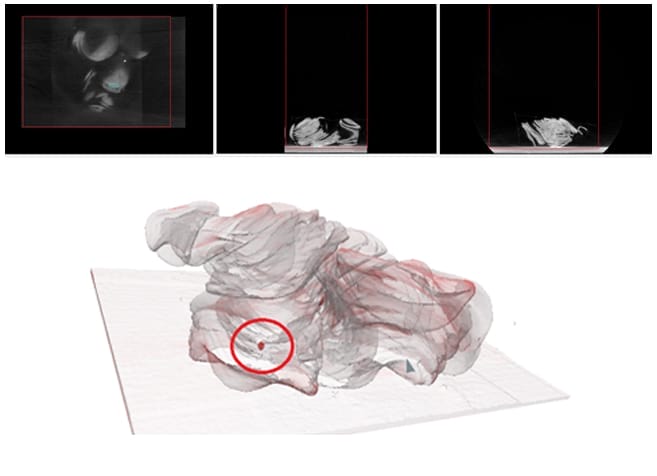
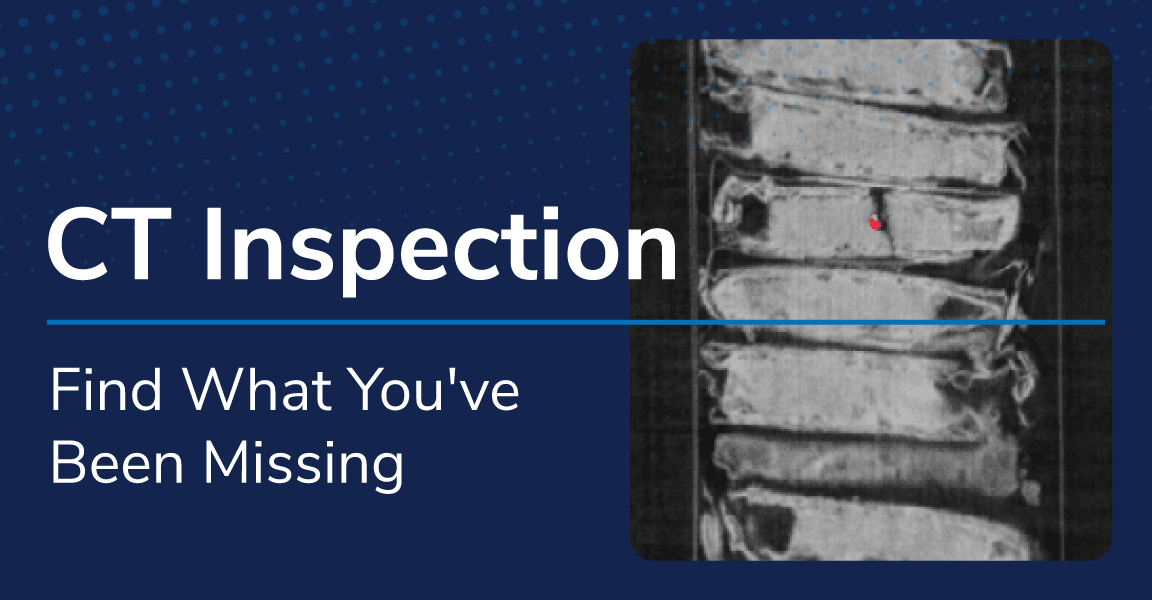
Like traditional X-ray, CT technology relies on density-based imaging—but instead of a 2D view, CT generates a 3D image by rotating around the product. This allows contaminants to be identified even when they’re difficult to isolate due to size, orientation, or complex product structure.
CT isn’t a replacement for X-ray—it’s part of the same inspection toolkit. Every project is approached by selecting the inspection method that fits the product, the suspected contaminant, and the detection requirements.
98% of product inspected by FlexXray can potentially be returned to commerce.
How CT Differs from X-Ray Inspection
CT scanning uses the same underlying X-ray technology, but has specific strengths that help with certain inspection scenarios. By building a 3D image of the product, CT allows us to move through the product layer by layer to find even the most challenging contaminants.
This is most useful for products with overlapping structures, for products where orientation affects visibility, or when a contaminant is difficult to isolate within the product.
Inspection always starts with determining the most effective method. 3D CT scanning is used where it’s the right tool for the product and detection requirement, not as a default.
When We Use CT Inspection
CT inspection is applied based on the product and the detection requirements of the project. Below are the two most common scenarios where we’ll opt for CT technology.
Products with Complex Structure
Products with multiple layers, varying densities, or irregular geometry can make interpretation more difficult. CT allows those structures to be separated and evaluated.
Low Contrast Between Contaminant and Product
When a contaminant closely matches the surrounding material, CT can help isolate it within the product.
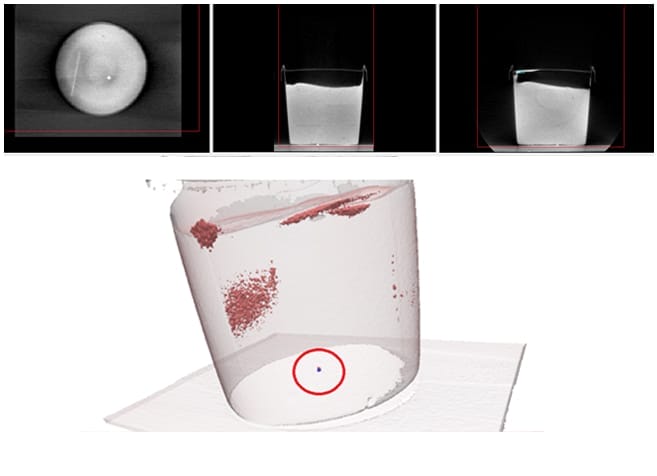
Product: Peanut Butter
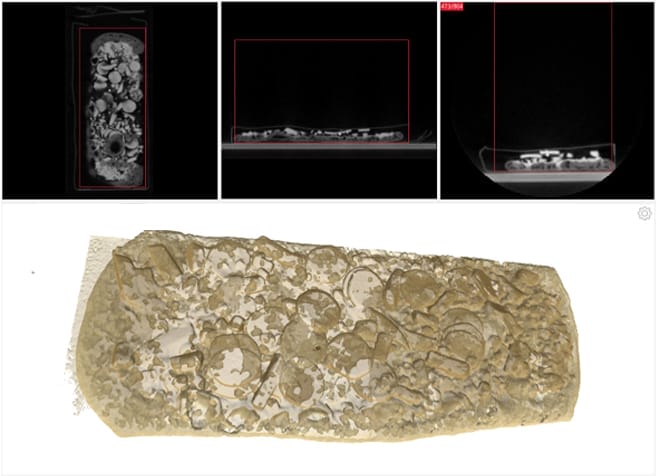
Product: Frozen Pizza
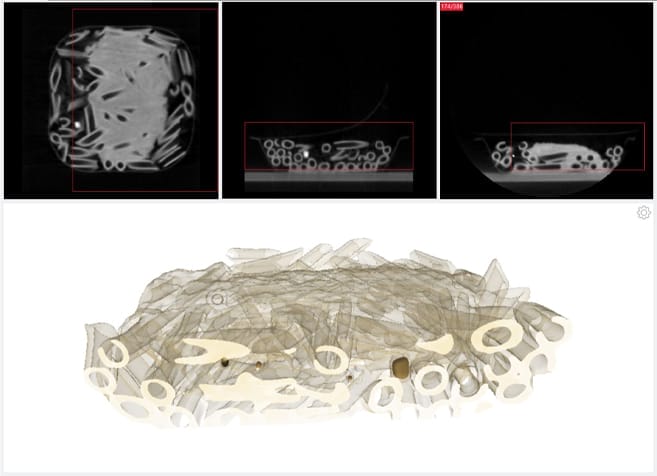
Product: Ready Pasta
Product: Turkey Pepperoni
How CT Inspection Works
FlexXray’s process is designed to move quickly and get your product back into commerce while keeping everything controlled and fully traceable.
RECEIVE
Product arrives at a FlexXray facility and is logged, staged, and organized by lot. From intake through inspection, each unit remains traceable—so there’s a clear record of what was received, how it was handled, and what was inspected.
INSPECT
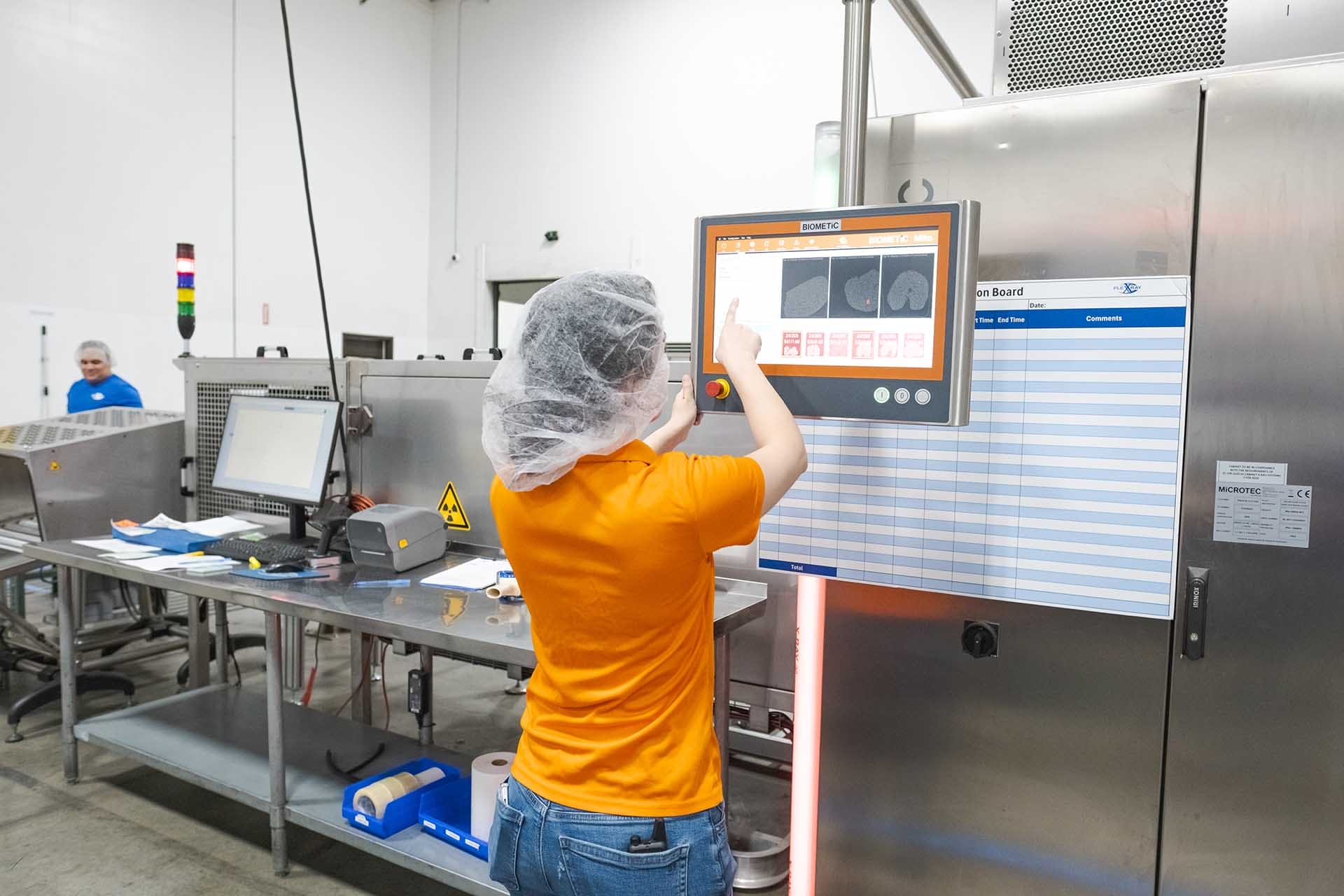
We scan your product using our medical-grade 3D CT systems configured for your specific product. That imaging helps locate and isolate contaminated product from safe product.
REPORT
Findings are documented and shared clearly, including what was identified, where it was located, and how much product was affected. This data supports your final product disposition and gets more product back into commerce.
CT Inspection: One Tool in Our Toolkit
CT scanning is part of a broader inspection approach—not a standalone service.
Every project begins with testing and evaluation to determine how the product and potential contaminant present in imaging. Based on that, FlexXray selects the method that will deliver a reliable result.
In some cases, CT is used to answer specific questions within a larger inspection process. When physical confirmation is needed, contaminant retrieval can follow to isolate and return the foreign material.
FlexXray offers CT inspection at each of our locations across the United States and in France to maximize our inspection capabilities for our customers.

Related Inspection Services
X-ray inspection is FlexXray’s primary method for identifying foreign material in food products. In more complex cases—such as when contamination is difficult to isolate or visualize—advanced imaging methods like CT scanning may be used to provide additional insight.
FlexXray also offers contaminant retrieval services, allowing identified foreign material to be physically removed and analyzed as part of a broader investigation.

FAQs
CT is used to identify and evaluate foreign material within products, particularly in situations where a detailed understanding of the product is required.
Both use x-ray technology. CT scanning produces a three-dimensional image, allowing internal structures to be examined in more detail.
CT inspection is used as part of a broader inspection process. The method is selected based on the product and detection requirements.
No. CT is used when it is the most appropriate method for the product and foreign material contaminant.