
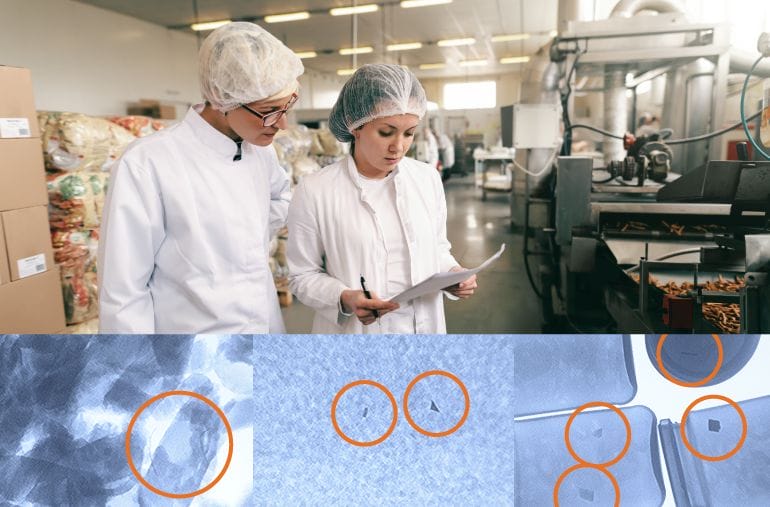
You go above and beyond to ensure the consistent quality and safety of your food supply. You’re meticulous about making sure you exceed your customers’ expectations. You have tools and technologies in place to monitor performance and minimize potential problems at your plant. You’re proactive to a fault and dedicated to continuous improvement of your goods and services.
Despite your best efforts to prevent contamination, mistakes happen. Odds are a foreign material will land in your product during production or packaging. What’s more, you most likely won’t have a clue that there’s unwanted debris hiding in your food.
Contamination Happens — It’s Only Human
Although nobody likes to imagine it, every plant in the industry is at risk for contamination. Foreign material contamination comes with the food processing territory. But, rest assured, it’s nothing to be embarrassed about.
With the countless number of products passing through your plant on any given day, having an unwanted item slip into your supply is just one of the challenges of the job. It’s how you handle this challenge that makes all the difference.

The Main Sources of Foreign Material in Food
Here are the primary sources of foreign material in foods, including fresh and frozen protein, prepared meals, prepared/processed foods, canned and bottled goods, dairy, deli, ingredient meats, bakery items and frozen desserts.
- Metal: Metal is the most common food contaminant, which makes sense, as it’s in such abundant supply at production plants. Sources of metal contamination can include stray metal bits from grinding, cutting and dicing operations, splinters and shavings, wire, bolts, nails, screws, utility knives, and staples.
- Glass: Glass is the most frequently reported food contaminant to cause illness or injury. It can originate from broken bottles or jars, shattered light bulbs or gauge covers, for example.
- Plastic: Plastic is another frequent contaminant that results from broken conveyor belting or guide rail material, plastic tools and even safety glasses. Additionally, packing materials, gasket, pallets and anything composed of hard or soft plastic could potentially corrupt your product.
- Bone: When meat, fish or poultry are involved, it’s possible that a bone or bone fragment will wind up in the mix.

- Stones: Despite thorough rinse-offs with water after they’re harvested, such crops as beans, peas, and potato products are often contaminated with stones when they land at a food facility.
- Wood: Wood can splinter from pallets, boxes and other containers and is a common culprit tainting food products during production or processing. But wood contamination can also happen at the farm. Tiny stems and such can easily be collected right along with crops at harvest time.
- Rubber and gasket: Gasket and seals on piping and equipment can cause unfortunate contamination issues.
- Product clumps: Processed foods that have binding ingredients or coatings, such as powder or honey, are at risk of clumping.

See what we mean? Contaminants can come from pretty much anywhere. More often than not, contamination stems from internal equipment failures, like machine parts rubbing together or breaking off or causing other types of foreign material issues.
Sometimes, suppliers and vendors can unwittingly introduce objectionable materials into your product without you or them ever knowing it. Although it’s a disturbing thought, a disgruntled employee can even strike back by sabotaging your product to damage your reputation.
Worried that one of these common contaminants has slipped into your food? Contact one of our experts today to learn about FlexXray’s advanced X-ray technology, which can detect contaminants as small as 0.8 mm; sometimes even smaller.


Leave a Reply
You must be logged in to post a comment.