What is Foreign Material Contamination in Food? – Staging
Foreign material contamination is the presence of any unintended physical object in a food product. Unlike chemical or biological contamination, foreign material is physical: something that can be seen, retrieved, and traced back to a source. It’s the type of contamination most commonly encountered in food production, and the one with the widest range of causes and detection considerations.
The Three Types of Food Contamination
Biological
Microorganisms that pose a health risk such as bacteria, viruses, molds, and parasites.

Chemical
Unintended substances introduced during production or handling, including pesticide residues, cleaning agents, or allergens from cross-contact.

Physical
A foreign object present in the product: metal, glass, bone, plastic, stone, rubber, and more.

Why Foreign Material Contamination Matters in FSQA
A foreign material event that reaches consumers carries obvious consequences: potential harm, recall exposure, and regulatory scrutiny. And the less visible costs — product sitting on hold, production disruption, supplier investigations, CAPA requirements — are often just as significant. For food producers, foreign material contamination isn’t an edge case. It’s a persistent operational reality that FSQA programs are specifically designed to manage.

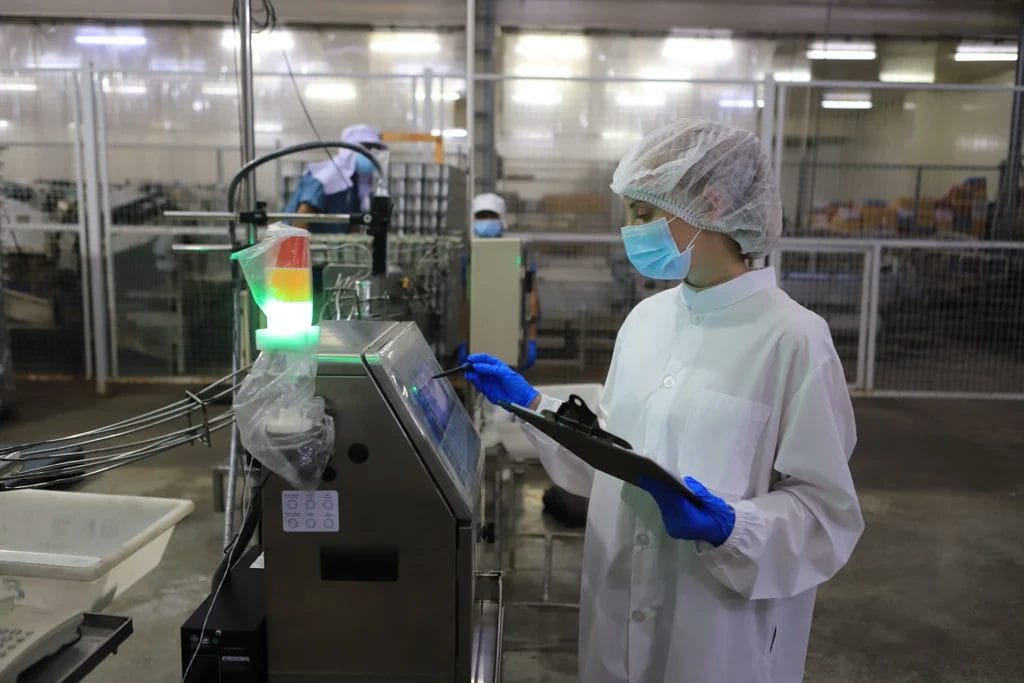

Managing Foreign Material Contamination
Managing foreign material contamination means building a program that works across three stages: prevention, detection, and response. Supplier monitoring and ingredient inspection reduce exposure upstream. Detection technology identifies what gets through at your facility. And when something is found, a defined response protocol determines how quickly and completely you can act. The strongest programs treat all three stages as connected rather than independent.
FAQs
Foreign material contamination is the presence of any unintended physical object in a food product — something that isn’t part of the product’s intended composition. Common examples include metal fragments, glass, bone, hard plastic, and stone.
The three categories are physical, chemical, and biological. Physical contamination — foreign material — involves unintended objects in the product. Chemical contamination involves unintended substances like pesticide residues or cleaning agents. Biological contamination involves microorganisms including bacteria, viruses, and molds.
Metal, glass, bone, hard plastic, and stone are the most frequently identified foreign material types in food manufacturing. The mix varies by product category, production environment, and supplier inputs.
Prevention programs typically combine supplier monitoring, equipment maintenance protocols, employee training, and incoming ingredient inspection. No single measure eliminates risk entirely — effective programs address multiple entry points simultaneously.
The immediate priority is containing the affected product and establishing the scope of the hold. From there, the response typically involves determining whether in-house reinspection capacity is sufficient, initiating root cause investigation, and documenting findings for CAPA purposes. Third-party inspection is most commonly engaged when the volume or complexity of the hold exceeds internal capacity.